
CURRENT RECRUITING TRIALS
CONTACT US
nm.neurocru@mcgill.ca
CHUGAI RAY902CT RAINBOW (Immune mediated necrotizing myopathy, dermatomyositis)
This Phase 1b basket trial will investigate the safety, tolerability, pharmacokinetics, pharmacodynamics, immunogenicity and preliminary efficacy of RAY121, a inhibitor of classical complement pathway, after multiple dose administration in patients with immunological diseases such as antiphospholipid syndrome (APS), bullous pemphigoid (BP), Behçet’s Syndrome (BS), dermatomyositis (DM), immune-mediated necrotizing myopathy (IMNM) and immune thrombocytopenia (ITP).
NOVARTIS EDK060 (Charcot-Marie-Tooth)
A First-in-human, Multi-center, Randomized, Participant- and Investigator-blinded, Placebo Controlled, Single Ascending Dose Study to Assess the Safety, Tolerability, and Pharmacokinetics of EDK060 in Adults With Charcot-Marie-Tooth Type 1A (CMT1A).
The purpose of this study is to characterize the safety, tolerability, and pharmacokinetics of EDK060 as compared to placebo in adult patients with CMT1A.
PEPGEN FREEDOM 2 (Myotonic Dystrophy 1)
The purpose of this study is to learn about the effects of an investigational medicine, PGN-EDODM1, to see how safe and tolerable multiple administrations of PGN-EDODM1 are for people with myotonic dystrophy type 1 (DM1) compared to placebo. weeks).
SANOFI BrAAVe (Myotonic Dystrophy DM1)
This is a Phase 1/Phase 2 open-label single arm, multicenter, and multinational study with SAR446268 for treatment of male and female participants 10 to 50 years old with non-congenital myotonic dystrophy (DM) type 1 (DM1).
The purpose of this study is to evaluate the safety and efficacy of SAR446268 in knocking down dystrophia myotonica protein kinase (DMPK) messenger ribonucleic acid (mRNA) levels and improving neuromuscular function in DM1 participants receiving a single intravenous (IV) administration of SAR446268. The study consists of a dose escalation part (Part A) during which single ascending doses of SAR446268 will be evaluated in 3 distinct cohorts and an optional 4th dose cohort. Once a safe and effective dose is identified, additional participants will be treated in Part B, the dose expansion phase of the study.
The study duration will be 110 weeks (approximately 2 years) for each participant in Parts A and B respectively and includes a 6-week screening phase and a 104-week follow-up period post-SAR446268 administration.
SANOFI VITALIZE (CIDP)
The purpose of the study is to evaluate efficacy of riliprubart compared to IVIg in adult participants with CIDP who are receiving maintenance treatment with IVIg. The study duration will be for a maximum of 109 weeks including screening, treatment phases, and follow-up.
VERTEX VX23-670-001 (Myotonic Dystrophy 1)
A Study of Long-term Safety and Efficacy of VX-670 in Participants With Myotonic Dystrophy Type I
UPCOMING TRIALS
ARROWHEAD ARO-DM1 (Myotonic Dystrophy)
A Phase 1/2a Dose-Escalating Study to Evaluate the Safety, Tolerability, Pharmacokinetics, and Pharmacodynamics of ARO-DM1 in Subjects With Type 1 Myotonic Dystrophy Who Are 18 to 65 Years Old
This is a Phase 1/2a double-blinded, placebo-controlled, dose-escalating study to evaluate the safety, tolerability, pharmacokinetics (PK) and pharmacodynamics (PD) of single and multiple ascending doses of ARO-DM1 compared to placebo in male and female subjects with Type 1 Myotonic Dystrophy (DM1).
CHUGAI RAINBOW LTE (IMNM, Dermatomyositis)
Phase 1b Long-term Extension Trial of RAY121 in Immunological Diseases (RAINBOW-LTE Trial)
ACTIVE (NOT RECRUITING) TRIALS
ARGENX ARGX-117-2202 (Multifocal Motor Neuropathy)
A Multicenter Prospective Longitudinal Study of Clinical Outcomes, Disease Course, Health-Related Quality of Life, and Health Care Resource Utilization in Adult Patients With Multifocal Motor Neuropathy
This trial is an extension of the antecedent trial ARGX-117-2002. It is a multicenter trial that has been designed to evaluate the long-term safety and tolerability, efficacy, immunogenicity, Pharmacokinetics (PK), and Pharmacodynamics (PD) of ARGX-117 Intravenously (IV) in adults with Multifocal Motor Neuropathy (MMN). The trial will include a double-blinded rollover treatment period (DTP), an open-label treatment period (OTP), and a safety follow-up period.
ASTELLA AT8450-02 (Pompe Disease)
A Multicenter Prospective Longitudinal Study of Clinical Outcomes, Disease Course, Health-Related Quality of Life, and Health Care Resource Utilization in Adult Patients With Multifocal Motor Neuropathy
This trial is an extension of the antecedent trial ARGX-117-2002. It is a multicenter trial that has been designed to evaluate the long-term safety and tolerability, efficacy, immunogenicity, Pharmacokinetics (PK), and Pharmacodynamics (PD) of ARGX-117 Intravenously (IV) in adults with Multifocal Motor Neuropathy (MMN). The trial will include a double-blinded rollover treatment period (DTP), an open-label treatment period (OTP), and a safety follow-up period.
AVIDITY HARBOR AOC-1001-CS3 (Myotonic Dystrophy 1)
The study consists of a Screening Period of up to 6 weeks and 54-week Treatment Period. The anticipated duration is approximately 60 weeks.
Participants will be randomized to receive an intravenous infusion of either del-desiran or placebo at the clinical study site every 8 weeks for a total of 7 doses. The final dose will occur at Week 48, followed by a final assessment at Week 54.
After completion of Week 54 assessments, eligible participants will have the option to enroll into an open label extension (OLE) study, pending regulatory approval.
AVIDITY HARBOR OLE (Myotonic Dystrophy 1)
The study consists of a Screening Period of up to either 4-weeks or 8-weeks depending on the prior parent trial, and up to a 4-year Treatment Period. The anticipated duration is 50 months and 2 weeks (4 years and 2.5 months).
Participants will receive an intravenous infusion of del-desiran at the clinical study site every 8 weeks for a total of 7 doses per year. The final dose will occur at Year 4, Visit 7, followed by a final assessment 8 weeks after the last dose.
An additional subgroup of de novo participants will also be included in a Fixed-Dose PK cohort.
IMMUNOVANT IMVT-1401-3101 (generalized Myasthenia Gravis)
The purpose of this study is to learn how well batoclimab works and how safe it is, when compared with placebo (an inactive material that looks like batoclimab but does not have any active drug).
The placebo used in this study looks exactly like batoclimab but it does not contain any active medication. Placebos are sometimes called sugar pills, dummy treatments, or shams. We are using a placebo to compare with batoclimab, and to ensure that the changes you report in your health, good or bad, are not only due to chance. In this information and consent form, the use of “study drug” refers either to batoclimab or the placebo.
For this study, 240 male and female participants will be recruited at approximately 110 centers across North America, Asia, Europe, Central America, and South America. The participants will be aged 18 and older.
UKansas - MOVE (FSHD)
Motor Outcomes to Validate Evaluations in Fascioscaperohumeral Dystrophy (MOVE FSHD)
The primary goal of this proposal is to collect motor and functional outcomes specific to FSHD over time. By collecting measures specific to FSHD, this will help ensure the best level of clinical care is being provided. Also, the hope is to speed up drug development by gaining a better understanding of how having FSHD impacts motor function and other health outcomes (i.e. breathing, wheelchair use, etc.) and how big a change in motor function would be clinically meaningful to those with FSHD.
Motor Outcomes to Validate Evaluations in FSHD (MOVE FSHD) will have approximately 450 FSHD participants followed for a minimum of 3 years. A subset of MOVE FSHD participants, approximately 200, will participate in the MOVE+ sub-study which includes whole body MRI and muscle biopsy.
VERTEX VX24-670-101 (Myotonic Dystrophy 1)
A Study of Long-term Safety and Efficacy of VX-670 in Participants With Myotonic Dystrophy Type 1
An Open-label Extension Study Evaluating the Long-term Safety, Tolerability, Efficacy, Pharmacokinetics, and Pharmacodynamics of VX-670 in Adult Subjects With with Myotonic Dystrophy Type I (DM1).
—
THE TEAM

Dr. Oliver Blanchard
Principal Investigator

Dr. Rami Massie
Principal Investigator

Dr. Daria Trojan
Principal Investigator

C. Stent-Torriani
Team Lead
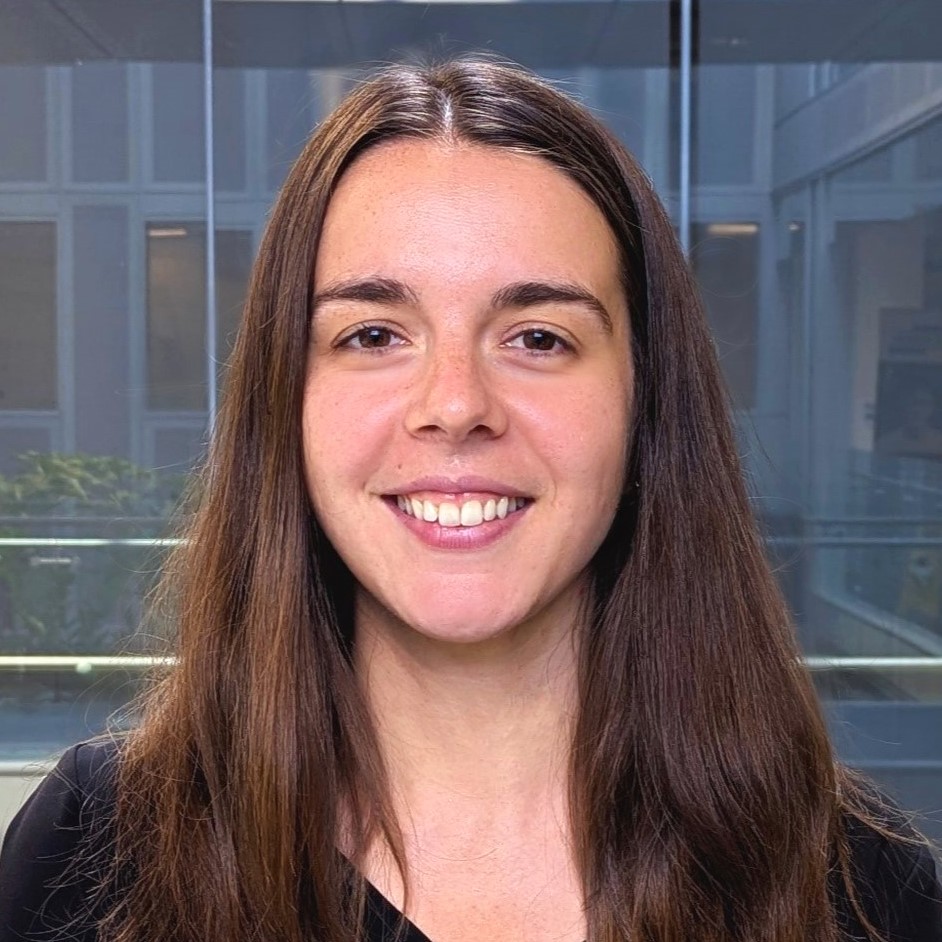
Tanya Karyakina
Clinical Research Coordinator

Julien Kridelka
Clinical Research Coordinator
__
For more information, please contac

Dr. Erin O’Ferrall
Principal Investigator

Dr. Angela Genge
Principal Investigator

Dr. Bernard Brais
Principal Investigator

Sabrina Yusuf
Clin. Research Coord.

Jessica Cuerquis
Clinical Research Coordinator

Chiara Sabbadini
Clinical Research Coordinator