

2025: The year in Review
A look back at the breakthroughs and highlights that have marked the past year
December 19, 2025 | by Sophie Lorenzo
As one of the largest clinical research centres in Canada, the Clinical Research Unit at The Neuro (Neuro CRU) contributes to significant advances in the treatment of neurological diseases, which affect more than 30% of Quebecers.
We are fortunate to collaborate with clinician-scientists who contribute to science through their own preclinical research, while ensuring that the most innovative studies are offered to their patients at the Neuro. We are proud to have contributed to several significant successes in neurological treatments.
MAJOR BREAKTHROUGHS
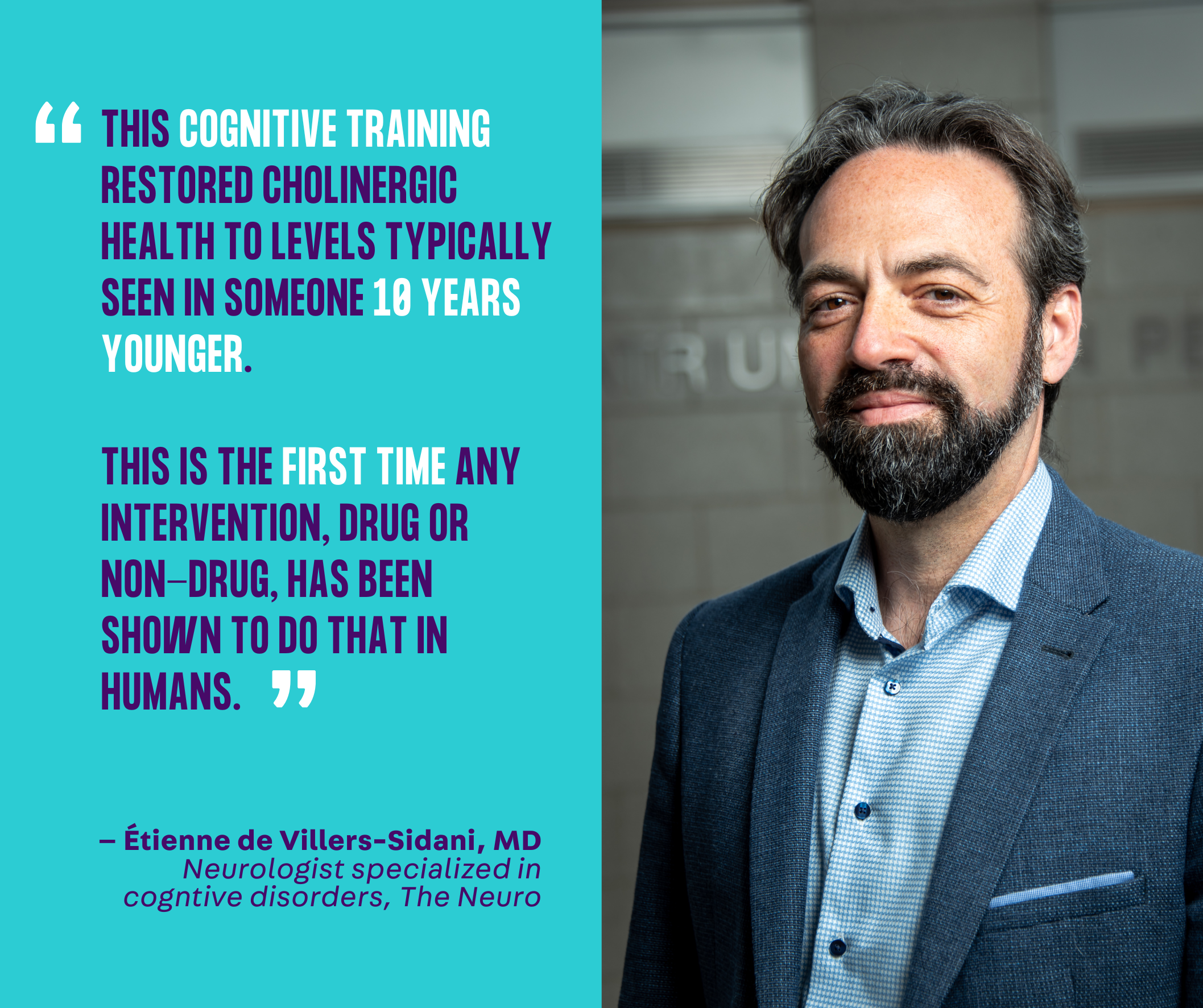
Cognitive Decline – First successful reversal
A landmark study at the Neuro CRU demonstrated, for the first time, that an intervention could counter cognitive decline. The cognitive training programme (Brain HQ) improved memory and learning in healthy participants after 10 weeks. The results, confirmed by PET imaging, showed an increase in acetylcholine, which is essential for concentration and memory and declines with age. ctvnews.ca
Brain Tumour – AI-supported cancer surgery
A revolutionary device, developed by neurosurgeon Kevin Petrecca with a team from Polytechnique, is able to detect abnormal cells at the edge of tumours using AI. This innovative tool the size of a pen is set to transform the precision of oncological surgery and improve patient outcomes by removing all potentially cancerous tissue. ctvnews.ca
INNOVATIVE TRIALS
Stroke – A unique trial
The Neuro CRU is the only site in the province with a targeted trial for cerebral amyloid angiopathy (CAA), the leading cause of intracerebral haemorrhages for which there is no existing treatment. This treatment aims to prevent the accumulation of amyloid, which can build up and weaken blood vessels.
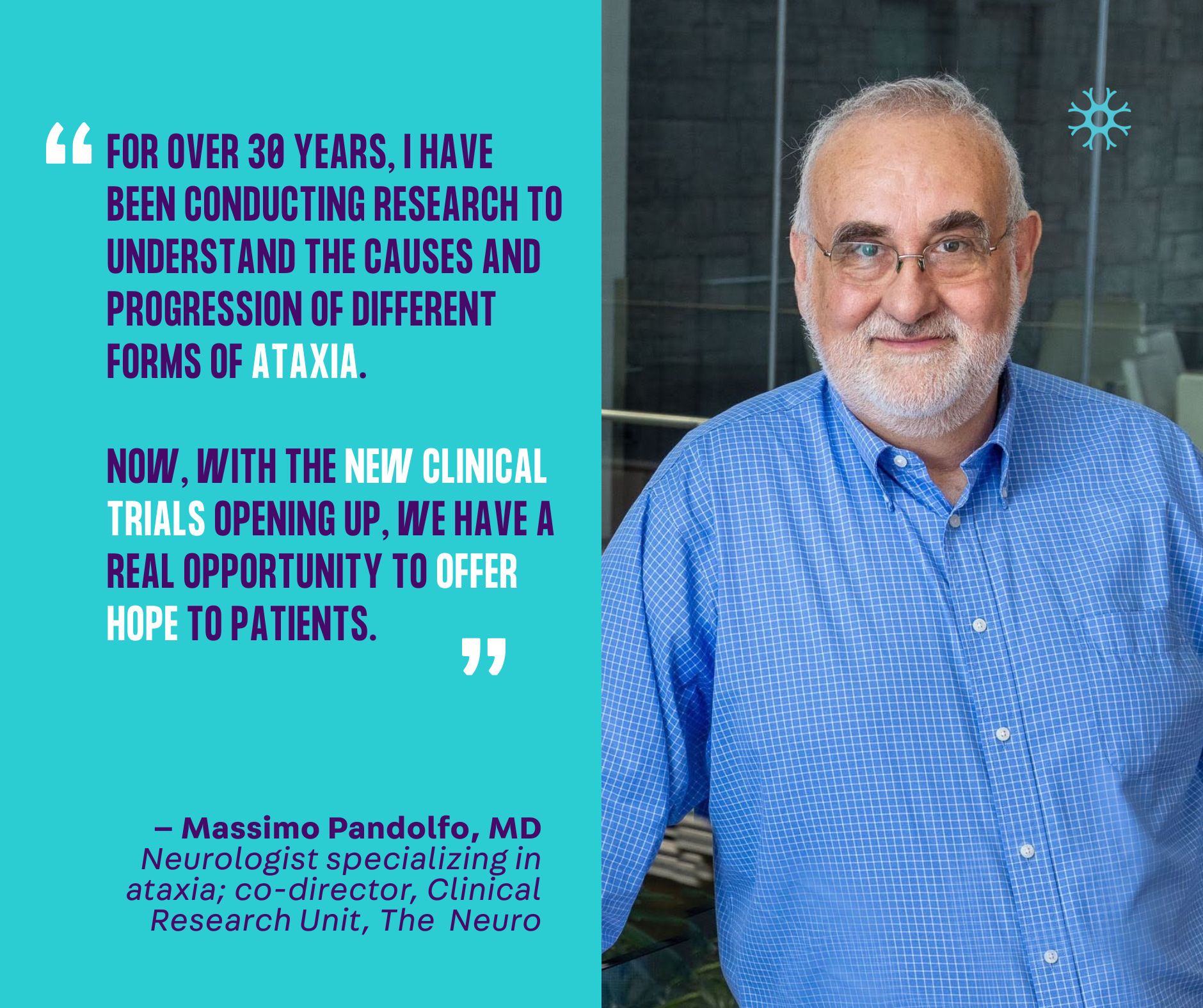
Ataxia – First RNA trial for SCA2
A promising trial for SCA2, a form of ataxia overrepresented in Quebec, hopes that a small interfering RNA (siRNA) molecule can reduce the overproduction of ataxin-2, which becomes toxic and cause worsening coordination problems in people with the disease.
cru.mcgill.ca/sca2/
MS – Detecting changes when an MRI can’t
A trial is exploring whether eye tracking via an iPad can measure motor changes invisible to MRI scans, thereby detecting disease progression faster and enabling more personalised care.
cru.mcgill.ca/advances-ms/
ALS – a made-in-Quebec collaboration
The Neuro CRU’s Investigator-Initiated Trials team has facilitated a collaboration with a researcher at the Université de Montréal. The study is testing whether a drug approved for overactive bladder may also be effective in blocking the hyperactive cells responsible for nerve-muscle breakdown.
montreal.citynews.ca

INVESTIGATORS DRIVING RESEARCH
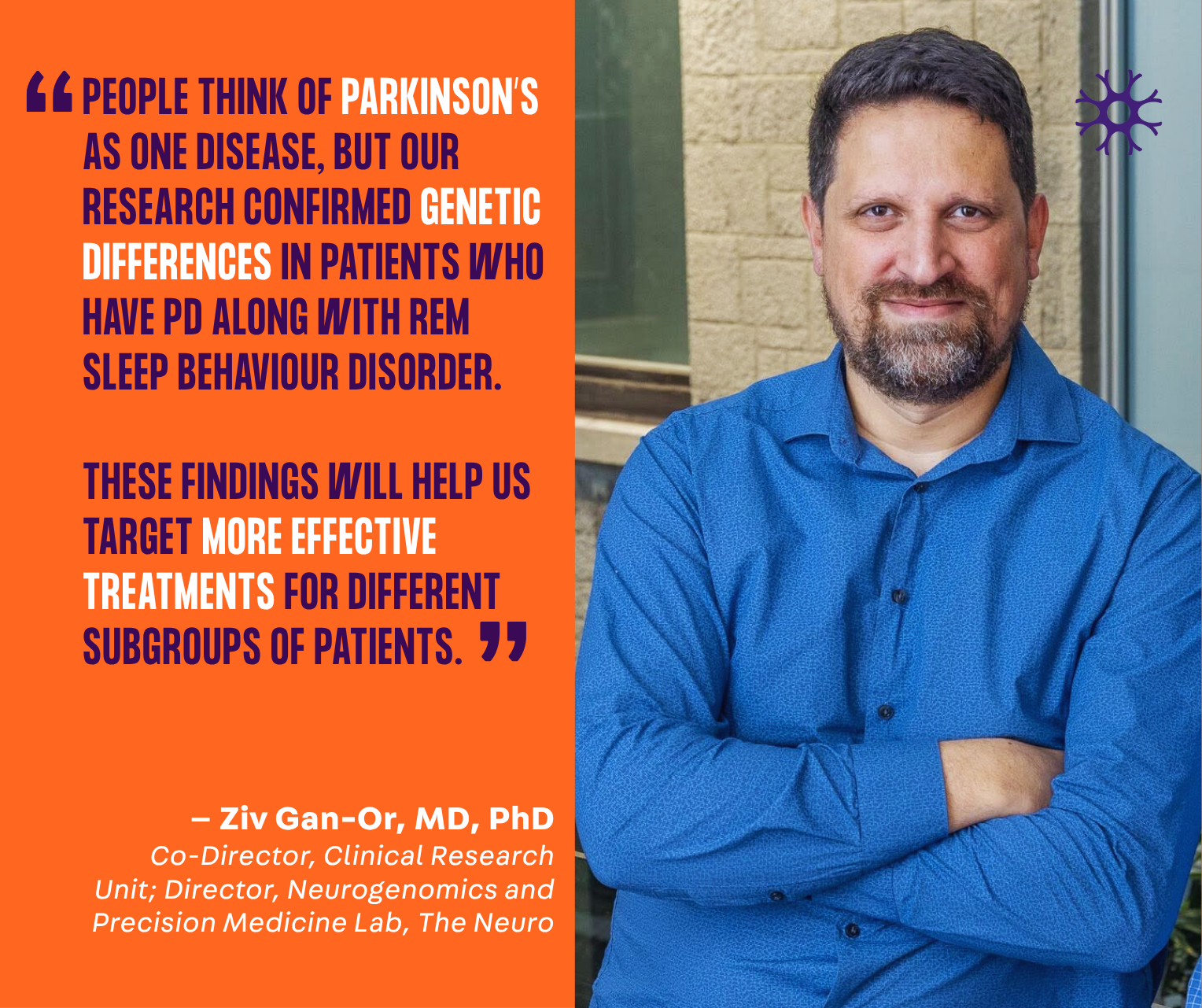
Parkinson’s – More than one type
A study published by Ziv Gan-Or, co-director of the Neuro CRU, showed that a distinct genetic subtype of Parkinson’s is linked to REM sleep behaviour disorder (RSBD). This subtype progresses more rapidly and presents non-motor symptoms such as depression and cognitive decline.
nature.com/NPJ
Lewy Body Dementia – Blood biomarkers for early detection
Research led by Gan-Or and Dr Ron Postuma, a clinician-researcher specialising in movement disorders, showed that blood biomarkers used for Alzheimer’s (tau and beta-amyloid) can also detect the early stages of Lewy body dementia in people with REM sleep behaviour disorder (RSBD).
nature.com
Accelerating translational research for precision medicine
The new Platform for Advanced Clinical Therapies (PACT) at the Neuro CRU will help transition promising therapies from preclinical studies to clinical trials. The PACT also aims to increase the number of trials involving advanced therapies, such as gene and RNA therapies, which offer promising precision treatments for neurological diseases.
cru.mcgill.ca/pact
To learn more about ongoing clinical trials
Consult our website: cru.mcgill.ca/fr/essais
Email: info-cru.neuro@mcgill.ca
Call : (514) 398 – 5500